ISO 22002-6:2025 Feed and Animal Food Production PRP Implementation Toolkit
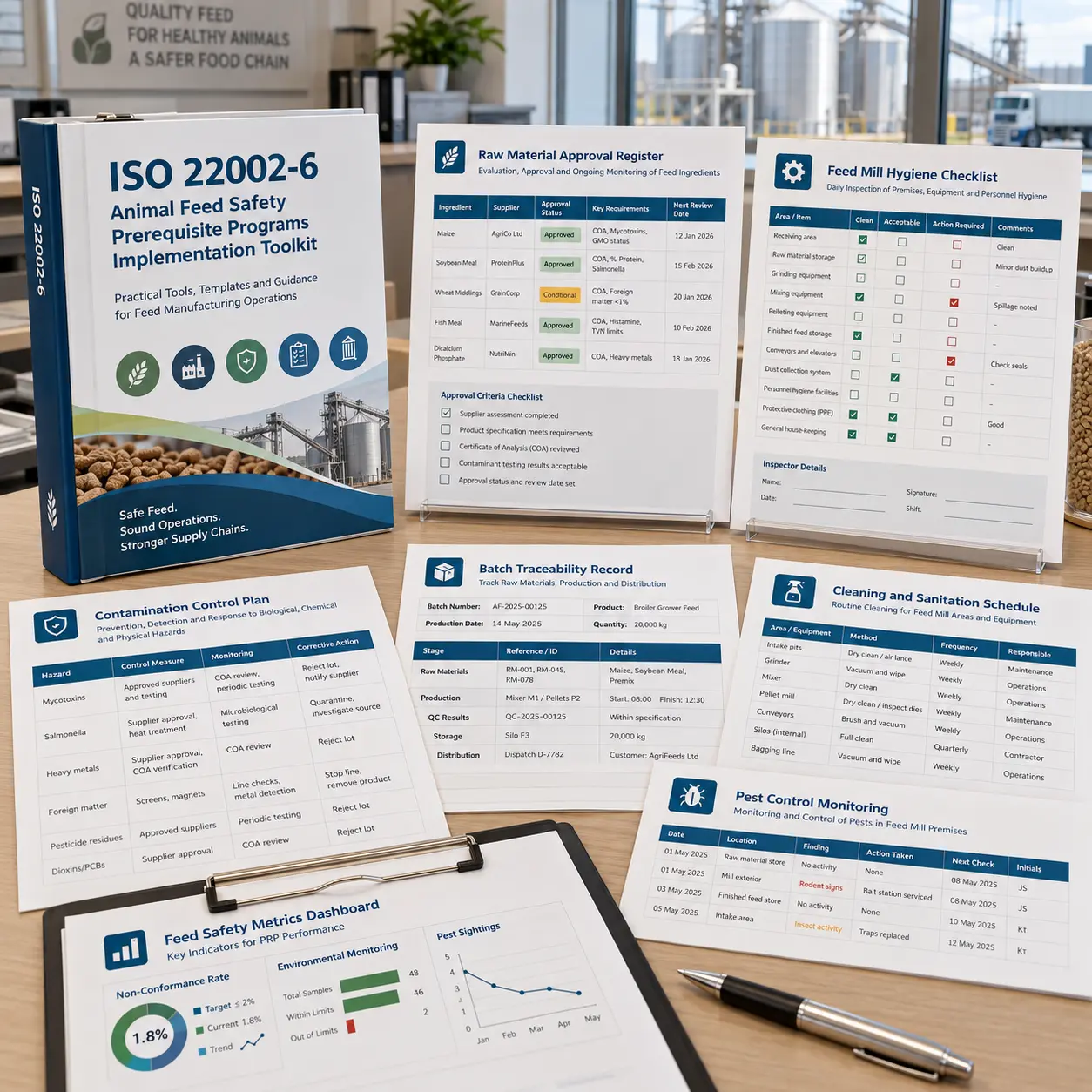
The ISO 22002-6:2025 Feed and Animal Food Production PRP Implementation Toolkit provides a comprehensive, easy to use set of premium templates and professionally structured resources to help feed mills, pet food manufacturers, and animal food producers establish, implement, verify, and sustain effective prerequisite programmes for feed safety.
Aligned with ISO 22002-6:2025 and ISO 22002-100:2025, the toolkit translates feed safety PRP requirements into practical policies, procedures, registers, checklists, matrices, workbooks, and presentations. It supports feed mill premises and zoning, utilities and dust extraction, equipment hygiene, supplier approval, receiving and sampling, silo and bulk storage, feed formulation, micro ingredient dosing, milling and mixing, pelleting and extrusion, carryover and medicated feed segregation, contaminant monitoring, dry sanitation, pest control, rework, finished feed release, packing and bulk dispatch, personnel hygiene and competence, traceability, feed fraud, food defence, incident response, internal audit, corrective action, management review, and enterprise handover.
ISO 22002-6 Toolkit Value & Pricing
Implementing feed safety prerequisite programmes can be demanding because controls extend across raw materials, supplier assurance, silos, formulation, micro dosing, production sequencing, medicated feed, thermal processing, dust, equipment, contamination, sanitation, pests, rework, product release, bulk loading, traceability, personnel competence, food defence, and incident response.
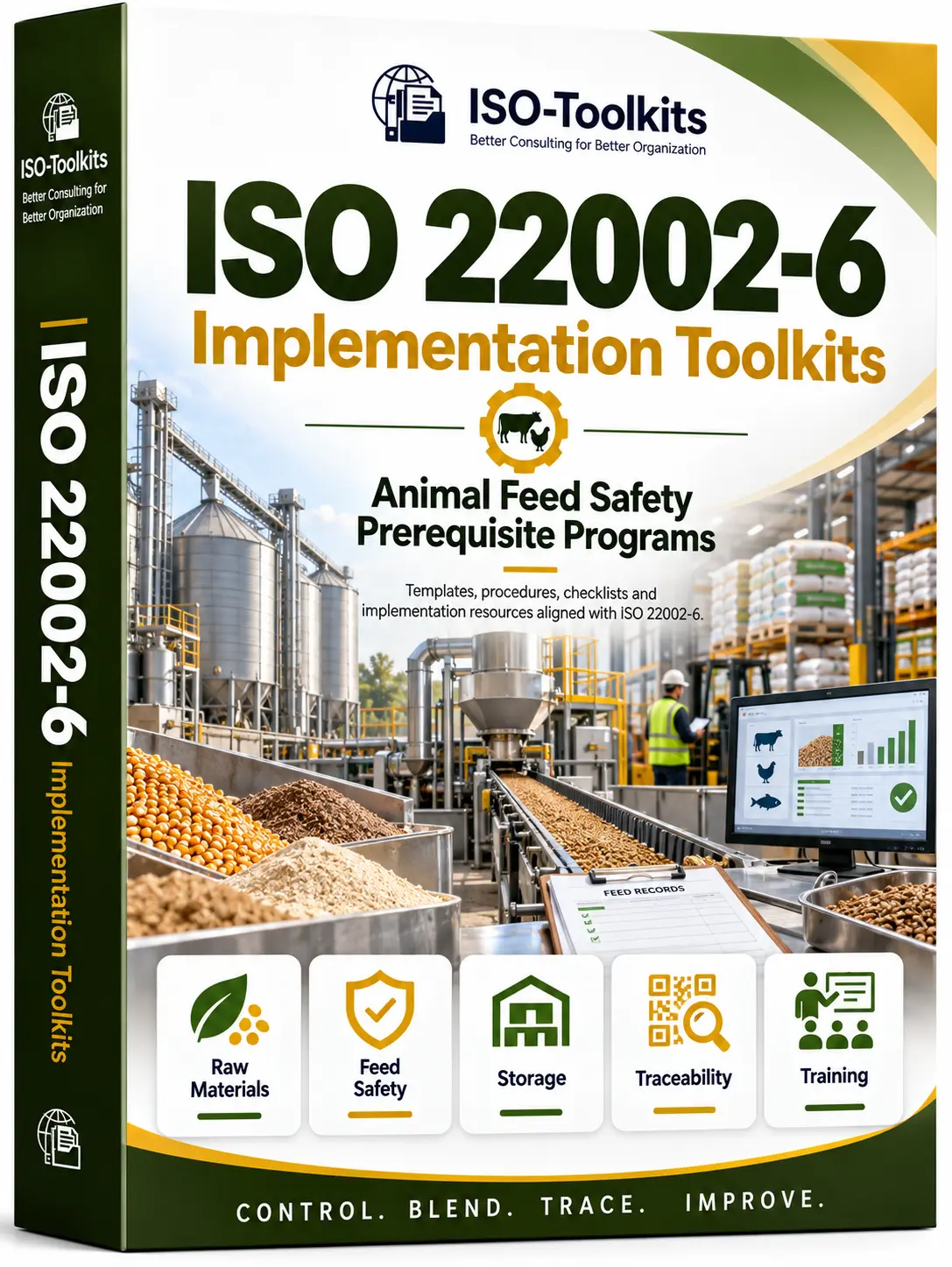
The ISO 22002-6:2025 Feed and Animal Food Production PRP Implementation Toolkit provides a comprehensive collection of easy to use templates and structured implementation documents in Word, Excel, and PowerPoint formats. It helps feed and animal food producers accelerate PRP implementation, standardize production and hygiene controls, strengthen carryover and contaminant prevention, improve release and traceability evidence, and maintain stronger verification and audit records.

ISO 22002-6 Toolkit Document Index
Below is the structured list of documents included in the package. Expand each part to review the files before downloading the index file.
 Part 1. Enterprise Feed Safety PRP Governance and Programme Initiation
 Enterprise Animal Feed PRP Policy.docx ISO 22002 6 Implementation Charter.docx Multi Site Feed PRP Governance and Responsibilities Procedure.docx
 Feed Production Sites and Product Scope Register.xlsx Enterprise Feed PRP RACI Matrix.xlsx PRP Implementation Roadmap and Action Tracker.xlsx
 Enterprise Feed PRP Programme Kickoff.pptx
Part 2. PRP Applicability, Gap Assessment and Risk-Based Deployment
Feed PRP Applicability and Justified Exclusions.docx Multi Site PRP Gap Assessment and Remediation Plan.docx ISO 22002 6 and 22002 100 Requirements Matrix.xlsx Feed Mill and Pet Food Site PRP Gap Assessment.xlsx Feed Safety Hazard and PRP Control Mapping.xlsx PRP Gap Closure and Investment Register.xlsx Feed PRP Gap Assessment and Rollout Review.pptxPart 3. Feed Mill Premises, Facility Layout and Hygienic Zoning
Feed Production Premises and Layout Control Procedure.docx Raw Material Processing and Finished Feed Zone Separation Plan.docx Feed Facility Structural and Hygiene Inspection.xlsx Feed Plant Zoning and Access Control Matrix.xlsx Material Personnel and Waste Flow Assessment.xlsx Premises Defect and Remediation Register.xlsx Feed Facility Layout and Zoning Review.pptxPart 4. Process Utilities, Ventilation and Environmental Conditions
Feed Production Water Steam and Utility Control Procedure.docx Ventilation Dust Extraction and Condensation Control Procedure.docx Water and Steam Quality Monitoring Log.xlsx Air Dust Extraction and Filter Inspection.xlsx Compressed Air and Food Contact Gas Verification Log.xlsx Utility Deviation and Corrective Action Register.xlsx Feed Utilities and Environmental Control Review.pptxPart 5. Equipment Hygienic Design, Maintenance and Calibration
Feed Production Equipment Hygienic Design Procedure.docx Preventive Maintenance and Post Repair Release Procedure.docx Feed Equipment Hygienic Suitability Checklist.xlsx Production Equipment Maintenance and Defect Register.xlsx Weighing Dosing and Testing Equipment Calibration Log.xlsx Post Maintenance Line Clearance Checklist.xlsx Feed Equipment Hygiene and Maintenance Review.pptxPart 6. Supplier Qualification and Feed Ingredient Approval
Feed Ingredient Additive and Packaging Supplier Approval Procedure.docx Feed Raw Material Specification and Purchased Material Control Procedure.docx Approved Feed Ingredient and Additive Supplier Register.xlsx Supplier Feed Safety Qualification and Reassessment.xlsx Raw Material Additive and Packaging Specification Register.xlsx Supplier Certificate of Analysis and Compliance Tracker.xlsx Feed Supplier and Ingredient Approval Review.pptxPart 7. Receiving, Sampling, Inspection and Material Release
Feed Ingredient Receiving and Inspection Procedure.docx Raw Material Sampling Quarantine and Release Procedure.docx Inbound Truck Bulk Tanker and Material Inspection.xlsx Feed Ingredient Receipt Sampling and Testing Log.xlsx Incoming Material Identification and Traceability Register.xlsx Rejected Raw Material Hold and Disposition Log.xlsx Feed Ingredient Receiving and Release Review.pptxPart 8. Silo, Bulk Ingredient and Warehouse Storage Controls
Silo Bulk Storage and Stock Rotation Procedure.docx Feed Ingredient Moisture Segregation and Storage Control Procedure.docx Silo and Bulk Bin Inspection and Cleaning Register.xlsx Ingredient Moisture Temperature and Storage Monitoring.xlsx Storage Compatibility and Species Restriction Matrix.xlsx FIFO FEFO and Inventory Deterioration Checklist.xlsx Feed Storage and Silo Hygiene Review.pptxPart 9. Feed Formulation, Additive Approval and Micro-Ingredient Dosing
Feed Formula Authorization and Change Control Procedure.docx Feed Additive Premix and Micro Ingredient Dosing Procedure.docx Approved Feed Formula and Revision Register.xlsx Ingredient Inclusion Limits and Species Compatibility Matrix.xlsx Premix Micro Ingredient Weighing and Dosing Log.xlsx Feed Formula Change and Approval Tracker.xlsx Feed Formulation and Dosing Control Review.pptxPart 10. Milling, Mixing, Conditioning and Thermal Processing
Grinding Milling and Mixing Operations Procedure.docx Pelleting Extrusion and Thermal Processing Procedure.docx Production Line Start Up Changeover and Release Procedure.docx Feed Batch Production and Process Parameter Log.xlsx Mixing Time Homogeneity and Validation Register.xlsx Pelleting Extrusion Heat Treatment Control Log.xlsx Cooling Drying and Moisture Control Log.xlsx Production Line Clearance and Batch Release Checklist.xlsx Feed Production Process Control Workshop.pptxPart 11. Carryover, Medicated Feed and Species-Specific Segregation
Feed Cross Contamination and Production Sequencing Procedure.docx Medicated Feed Carryover and Line Cleanout Procedure.docx Medicated and Non Medicated Feed Compatibility Matrix.xlsx Species Restricted Ingredients and Products Register.xlsx Production Sequencing and Flushing Verification Log.xlsx Medicated Feed Addition and Batch Authorization Log.xlsx Carryover Validation and Investigation Register.xlsx Feed Carryover and Species Segregation Review.pptxPart 12. Feed Contaminant Prevention and Laboratory Monitoring
Feed Contaminant Prevention and Testing Procedure.docx Microbiological Chemical and Physical Contamination Response Procedure.docx Mycotoxin and Pesticide Residue Monitoring Log.xlsx Salmonella and Microbiological Testing Register.xlsx Heavy Metals Dioxin and Other Contaminant Test Register.xlsx Sieve Magnet and Foreign Material Verification Log.xlsx Feed Contaminant Alert Limit and Disposition Matrix.xlsx Feed Contaminant Monitoring and Trend Review.pptxPart 13. Cleaning, Pest Prevention and Waste Management
Feed Mill Cleaning and Dry Sanitation Procedure.docx Integrated Feed Mill Pest Prevention Procedure.docx Feed Waste Spillage and By Product Handling Procedure.docx Master Feed Mill Cleaning and Inspection Schedule.xlsx Equipment Silo and Conveyor Cleaning Verification Log.xlsx Pest Monitoring and Treatment Register.xlsx Feed Dust Spillage and Waste Removal Inspection.xlsx Cleaning Pest and Waste Corrective Action Tracker.xlsx Feed Mill Sanitation Pest and Waste Review.pptxPart 14. Rework, Nonconforming Feed and Material Disposition
Feed Rework Reuse and Reprocessing Procedure.docx Nonconforming Feed Quarantine Investigation and Disposition Procedure.docx Feed Rework Origin and Compatibility Register.xlsx Rework Approval Incorporation and Traceability Log.xlsx Nonconforming Feed Hold and Disposition Register.xlsx Contaminated Feed Destruction and Disposal Record.xlsx Feed Rework and Nonconformance Control Review.pptxPart 15. Finished Feed Quality, Product Information and Release
Finished Feed Sampling Testing and Release Procedure.docx Feed Label Declaration and Species Suitability Verification Procedure.docx Finished Feed Quality and Safety Testing Log.xlsx Feed Product Label Ingredient and Use Restriction Checklist.xlsx Certificate of Analysis and Product Release Register.xlsx Finished Feed Shelf Life and Storage Stability Register.xlsx Finished Product Release Exception and Hold Log.xlsx Finished Feed Quality and Release Review.pptxPart 16. Packing, Bulk Dispatch, Transport and Traceability
Feed Packaging Bagging and Palletization Procedure.docx Bulk Loading Transport and Delivery Hygiene Procedure.docx Packaging Integrity and Label Application Checklist.xlsx Bulk Tanker and Truck Pre Load Hygiene Inspection.xlsx Feed Lot Bag Silo and Dispatch Traceability Register.xlsx Load Segregation Seal and Delivery Verification Log.xlsx Feed Dispatch and Traceability Review.pptxPart 17. Personnel Hygiene, Competence and Contractor Control
Feed Mill Personnel Hygiene and Facility Entry Procedure.docx Feed Safety Competence and Training Procedure.docx Personnel Hygiene and Workwear Inspection Checklist.xlsx Feed PRP Role Based Training and Competence Matrix.xlsx Contractor and Visitor Hygiene Authorization Register.xlsx Production Operator Training and Qualification Log.xlsx Feed Mill Personnel Hygiene and Competence Training.pptxPart 18. Food Defence, Feed Fraud and Incident Response
Feed Facility Security and Intentional Contamination Prevention Plan.docx Feed Ingredient Fraud Vulnerability and Mitigation Procedure.docx Feed Incident Withdrawal and Recall Support Plan.docx Feed Defence Threat and Site Vulnerability Assessment.xlsx Feed Fraud Ingredient Authenticity Risk Register.xlsx Feed Safety Incident Investigation and Containment Log.xlsx Feed Traceability Test and Recall Exercise Register.xlsx Feed Defence Fraud and Incident Response Exercise.pptxPart 19. PRP Verification, Internal Audit and Enterprise Handover
Feed PRP Verification and Performance Monitoring Procedure.docx Feed PRP Internal Audit and Corrective Action Procedure.docx Enterprise Feed PRP Handover and Sustainment Plan.docx Multi Site Feed PRP Verification and Audit Schedule.xlsx ISO 22002 6 and 22002 100 Internal Audit Checklist.xlsx PRP Nonconformity and Corrective Action Register.xlsx Feed PRP KPI and Management Review Dashboard.xlsx Site PRP Implementation Closeout and Acceptance Checklist.xlsx Enterprise Feed PRP Management Review and Closeout.pptxReview the complete file index, preview free sample templates, or check the purchase and payment guide.
ISO 22002-6 Toolkit Package & Download Information
| Date File Updated | 13/02/2025 |
| File Format | doc, docx, xls, xlsx, ppt, pptx |
| No. of files | 143 File; 19 Folders |
| File download size | 36.59 MB (rar). |
| Language |
 English |
| Purchase code | ISO22002-6-Toolkits |
Ready to Apply ISO 22002-6:2025?
Start with the complete ISO 22002-6 feed and animal food PRP toolkit or review the free sample before purchasing.
The ISO 22002-6 toolkit helped us structure feed mill PRPs around the actual flow from ingredient receipt through production, release, packing, and dispatch.
The feed mill zoning, utilities, dust extraction, and equipment hygiene templates made our facility review much more systematic.
The supplier qualification, raw material specification, receiving, sampling, and quarantine records gave procurement and QA one consistent control process.
The silo, bulk storage, moisture, species restriction, and stock rotation tools were practical for managing ingredients with different handling requirements.
The formulation, micro dosing, weighing, change control, and approval records improved traceability of formula changes and ingredient inclusion limits.
The milling, mixing, pelleting, extrusion, cooling, and process parameter logs helped us organize production verification much more clearly.
The carryover, medicated feed, sequencing, flushing, and species segregation tools were especially useful for risk based production planning.
The contaminant section helped us combine mycotoxin, Salmonella, chemical, physical, and foreign material monitoring into one review structure.
The dry sanitation, pest, dust, spill, waste, rework, and nonconforming feed templates strengthened our daily PRP control and corrective action records.
The finished feed release, label, certificate of analysis, bagging, bulk loading, tanker hygiene, and delivery records were practical for dispatch control.
The hygiene, role based training, visitor, contractor, and operator qualification records helped us standardize competence evidence across shifts.
The food defence, feed fraud, incident response, traceability exercise, internal audit, KPI, management review, and handover tools gave us a clear sustainment framework.