
ISO 28701:2025 Inland Shipping Safety & Sustainability Management System Implementation Toolkit
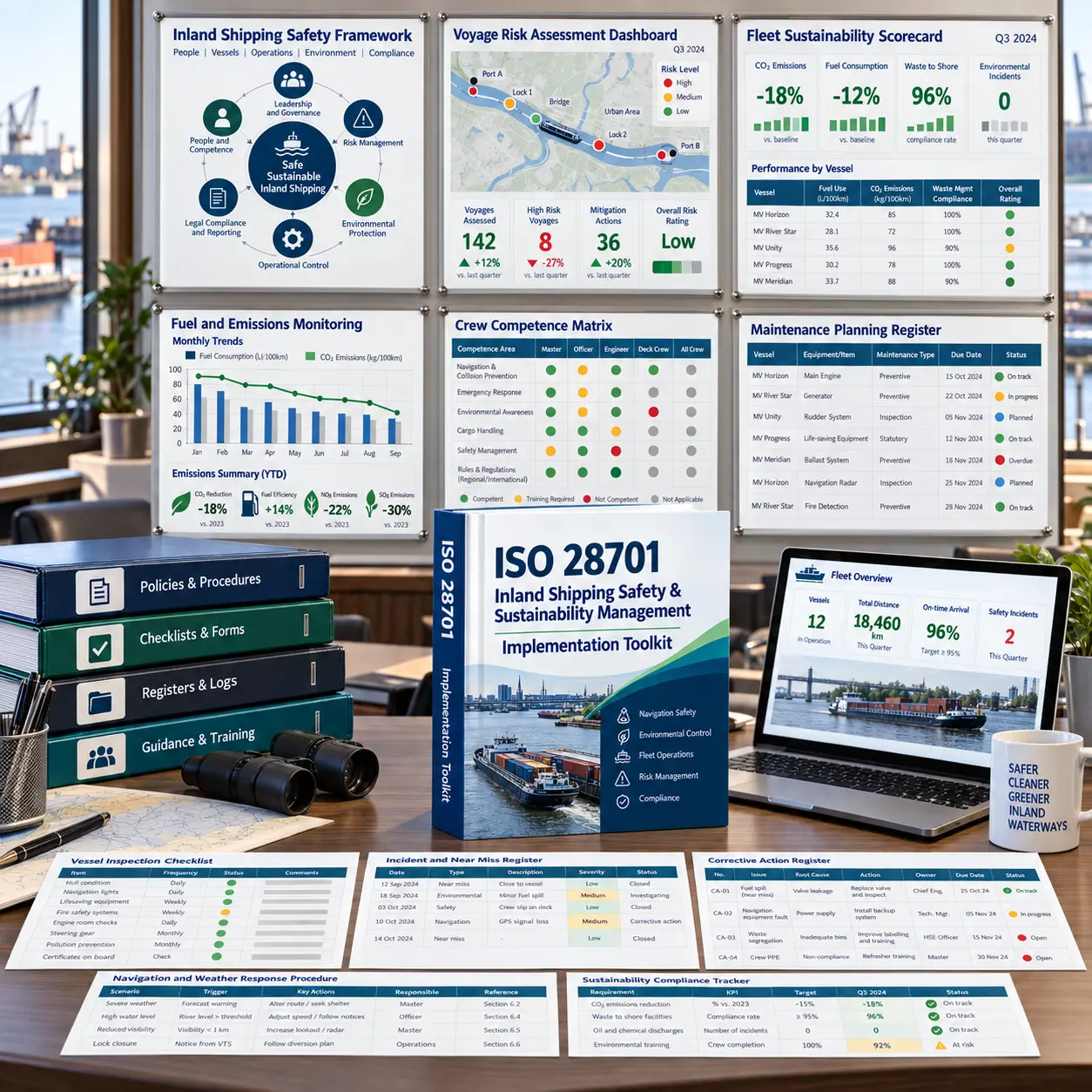
The ISO 28701:2025 Inland Shipping Safety & Sustainability Management System Implementation Toolkit provides a comprehensive, easy to use set of premium templates and professionally structured implementation resources to help inland shipping organizations establish, document, operate, monitor, and continually improve an integrated safety and sustainability management system.
Aligned with ISO 28701:2025, the toolkit translates inland navigation and commercial shipping safety and sustainability requirements into practical policies, procedures, registers, matrices, checklists, trackers, plans, and presentations. It supports fleet and shore governance, legal and stakeholder obligations, designated persons ashore, master authority, safety risk and sustainability objectives, voyage and service planning, crew competence and fitness, vessel condition and statutory readiness, hull and machinery maintenance, passage planning, navigation and watchkeeping, berthing and terminal interfaces, freight and passenger operations, bunkering and hazardous cargo, occupational safety, pollution prevention, ESG performance, climate and water level resilience, emergency preparedness, incident investigation, contractor and supplier controls, operational change, internal audit, management review, and programme handover.
ISO 28701 Toolkit Value & Pricing
Implementing an integrated safety and sustainability management system for inland shipping can be demanding because effective control extends across vessels, crews, shore functions, voyage planning, navigation, maintenance, statutory readiness, cargo or passenger operations, terminals, contractors, environmental protection, emergencies, climate and water level risks, compliance obligations, and performance evaluation.
The ISO 28701:2025 Inland Shipping Safety & Sustainability Management System Implementation Toolkit provides a comprehensive collection of easy to use templates and structured implementation documents in Word, Excel, and PowerPoint formats. It helps inland shipping organizations accelerate implementation, standardize ship shore governance, strengthen operational safety and sustainability controls, improve compliance and evidence management, support fleet wide performance monitoring, and establish a stronger basis for internal audit, management review, and continual improvement.

ISO 28701 Toolkit Document Index
Below is the structured list of documents included in the package. Expand each part to review the files before downloading the index file.
 Part 1. Enterprise Inland Shipping Safety and Sustainability Governance
 Enterprise Inland Shipping Safety and Sustainability Policy.docx ISO 28701 Implementation Charter.docx Enterprise Safety and Sustainability Management System Procedure.docx
 Enterprise Fleet and Shore Operations Scope Register.xlsx Safety and Sustainability Governance RACI Matrix.xlsx ISO 28701 Implementation Roadmap and Action Tracker.xlsx
 Enterprise ISO 28701 Implementation Kickoff.pptx
Part 2. System Scope, Inland Waterway Context and Gap Assessment
Inland Shipping Management System Scope and Boundaries.docx ISO 28701 Multi Vessel Gap Assessment and Remediation Plan.docx ISO 28701 Requirements and Evidence Matrix.xlsx Vessel Route Terminal and Shore Function Applicability Register.xlsx Multi Vessel Safety and Sustainability Gap Assessment.xlsx Implementation Gap Closure and Priority Register.xlsx ISO 28701 Scope and Readiness Review.pptxPart 3. Stakeholder Needs, Legal Requirements and Compliance Obligations
Inland Navigation Compliance and Obligations Management Procedure.docx Interested Party and Waterway Stakeholder Engagement Plan.docx Flag State Inland Waterway and Local Authority Requirements Register.xlsx Vessel Certificates Operating Permits and Validity Register.xlsx Stakeholder Service Safety and Sustainability Expectations Matrix.xlsx Compliance Obligation Change and Action Tracker.xlsx Inland Navigation Compliance and Stakeholder Review.pptxPart 4. Leadership, Designated Persons Ashore and Master Authority
Designated Person Ashore Appointment and Responsibilities.docx Master Responsibility Authority and Overriding Decision Procedure.docx Ship Shore Safety Communication and Escalation Procedure.docx DPA Master and Shore Management Responsibility Matrix.xlsx Multi Owner Operator and Management Authority Register.xlsx Ship Shore Safety Escalation and Decision Log.xlsx Leadership Commitment and Safety Culture Action Register.xlsx DPA Master and Ship Shore Governance Review.pptxPart 5. Safety Risks, Sustainability Opportunities and Management Objectives
Inland Vessel Safety Risk Assessment Methodology.docx Sustainability Risks Opportunities and Impact Assessment Procedure.docx Short and Long Term Safety and Sustainability Objectives Plan.docx Voyage Vessel and Shore Operation Risk Register.xlsx Social Environmental and Governance Risk Opportunity Matrix.xlsx Safety and Sustainability Objectives Targets and KPI Register.xlsx Risk Control Effectiveness and Management Action Tracker.xlsx Fleet Risk and Sustainability Objectives Workshop.pptxPart 6. Shipping Service Requirements and Operational Planning
Inland Shipping Service and Charter Requirements Review Procedure.docx Fleet Operational Control and Voyage Assignment Plan.docx Customer Cargo Passenger and Service Requirement Matrix.xlsx Voyage Operating Area and Vessel Suitability Review.xlsx Fleet Voyage Assignment and Resource Capacity Tracker.xlsx Service Changes Restrictions and Contract Review Register.xlsx Inland Shipping Operational Planning Review.pptxPart 7. Crew Manning, Competence, Fitness and Working Conditions
Inland Vessel Crew Competence and Manning Procedure.docx Crew Fatigue Fitness for Duty and Welfare Management Plan.docx Crew Licence Qualification and Endorsement Register.xlsx Vessel Manning Skills and Authorized Role Matrix.xlsx Crew Work Rest Fatigue and Fitness Monitoring Log.xlsx Crew Training Drill and Competence Assessment Register.xlsx Crew Competence Manning and Welfare Review.pptxPart 8. Vessel Condition, Statutory Surveys and Safety Equipment
Inland Vessel Condition and Statutory Readiness Procedure.docx Life Saving Fire Fighting and Safety Equipment Inspection Procedure.docx Fleet Vessel Hull Machinery and Certificate Master Register.xlsx Vessel Pre Sailing Condition and Safety Equipment Checklist.xlsx Survey Certification and Statutory Inspection Schedule.xlsx Life Saving Fire Fighting and Emergency Appliance Register.xlsx Vessel Condition and Safety Equipment Readiness Review.pptxPart 9. Hull, Machinery, Navigation Appliance and Preventive Maintenance
Vessel Hull and Propulsion Maintenance Management Procedure.docx Navigation Appliance Inspection and Out of Service Control Procedure.docx Fleet Preventive Maintenance and Dry Docking Schedule.xlsx Hull Propulsion Steering and Engine Room Inspection Log.xlsx Navigation Equipment Functional Check and Defect Register.xlsx Maintenance Repair Deviation and Return to Service Tracker.xlsx Hull Machinery and Navigation Equipment Reliability Review.pptxPart 10. Voyage Planning, Waterway Hazards and Passage Risk Assessment
Inland Waterway Passage Planning and Approval Procedure.docx Route Specific Navigational Risk and Contingency Plan.docx Voyage Route Water Depth Air Draft and Clearance Assessment.xlsx Current Tide Water Level and Hydrological Restrictions Log.xlsx Bridge Lock Bottleneck and Traffic Hazard Register.xlsx Voyage Weather Visibility and Go No Go Decision Checklist.xlsx Passage Plan Change and Master Approval Register.xlsx Inland Waterway Passage Planning Workshop.pptxPart 11. Navigation Execution, Watchkeeping, Locks and Bridge Transit
Bridge Watchkeeping and Safe Navigation Procedure.docx Lock Bridge and Restricted Waterway Transit Procedure.docx Bridge Pre Departure and Navigational Appliance Checklist.xlsx Navigation Watch Handovers and Voyage Event Log.xlsx Lock Bridge and Restricted Passage Transit Checklist.xlsx Navigation Deviation Near Miss and Response Register.xlsx Bridge Operations and Restricted Transit Review.pptxPart 12. Berthing, Mooring and Port or Terminal Interfaces
Inland Vessel Berthing Mooring and Unmooring Procedure.docx Ship Shore Terminal Interface and Custody Transfer Procedure.docx Berth Approach Mooring and Departure Risk Checklist.xlsx Terminal Vessel Communication and Responsibility Matrix.xlsx Mooring Gear Inspection and Defect Log.xlsx Port Terminal Interface and Operational Discrepancy Register.xlsx Mooring Berthing and Terminal Operations Review.pptxPart 13. Freight Cargo Handling, Securing and Vessel Stability (Where Applicable)
Inland Freight Loading Stowage and Cargo Securing Procedure.docx Cargo Load Distribution Draft and Stability Control Procedure.docx Cargo Type Vessel Suitability and Compatibility Matrix.xlsx Cargo Load Discharge and Weight Distribution Log.xlsx Cargo Securing Draft Trim and Stability Checklist.xlsx Cargo Hold Condition Spillage and Discharge Exception Register.xlsx Inland Freight Cargo and Stability Readiness Review.pptxPart 14. Passenger, Ferry and Cruise Safety (Where Applicable)
Passenger Boarding Disembarkation and Onboard Safety Procedure.docx Passenger Emergency Information and Assistance Plan.docx Passenger Capacity Boarding and Headcount Register.xlsx Passenger Accessibility and Special Assistance Checklist.xlsx Passenger Safety Briefing and Evacuation Readiness Log.xlsx Ferry Cruise Operational Safety and Crowd Control Checklist.xlsx Passenger Ferry and Cruise Safety Review.pptxPart 15. Fuel Handling, Bunkering and Hazardous Cargo Controls (Where Applicable)
Inland Vessel Bunkering and Fuel Transfer Safety Procedure.docx Dangerous Goods and Hazardous Substances Handling Procedure.docx Bunkering Pre Transfer and Spill Prevention Checklist.xlsx Fuel Bunkering Quantity Transfer and Consumption Log.xlsx Dangerous Goods Declaration Segregation and Compatibility Matrix.xlsx Fuel Leak and Hazardous Substance Incident Register.xlsx Fuel Bunkering and Hazardous Cargo Control Review.pptxPart 16. Occupational Safety, Permit to Work and Contractor Activities
Onboard Occupational Safety and Permit to Work Procedure.docx Contractor Safe Work and Hazardous Task Control Procedure.docx Confined Space Hot Work and Work At Height Permit Register.xlsx Job Safety Analysis and Personal Protective Equipment Checklist.xlsx Contractor Onboarding Worksite Control and Competence Register.xlsx Onboard Unsafe Condition and Safety Observation Log.xlsx Onboard Safe Work and Contractor Control Training.pptxPart 17. Pollution Prevention, Waste and Inland Waterway Protection
Shipboard Pollution Prevention and Discharge Control Procedure.docx Sewage Bilge Waste and Oily Residue Handling Procedure.docx Oil Sewage Garbage and Wastewater Discharge Compliance Matrix.xlsx Bilge Sewage Waste and Shore Reception Transfer Log.xlsx Pollution Prevention Equipment and Drip Control Checklist.xlsx Environmental Spill Release and Corrective Action Register.xlsx Inland Waterway Pollution Prevention Review.pptxPart 18. Sustainability Performance, Energy Efficiency and Social Responsibility
Fleet Environmental Social and Governance Performance Plan.docx Fuel Energy and Greenhouse Gas Monitoring Procedure.docx Social Responsibility and Workforce Wellbeing Action Plan.docx Fleet Fuel Energy and Emissions KPI Dashboard.xlsx Vessel Waste Water and Resource Efficiency Tracker.xlsx Workforce Wellbeing Community Impact and Grievance Register.xlsx Short and Long Term Sustainability Goal Progress Matrix.xlsx Fleet ESG and Sustainability Performance Review.pptxPart 19. Extreme Weather, Water Levels and Climate Resilience
Inland Waterway Climate and Hydrological Resilience Plan.docx Flood Low Water Ice and Extreme Weather Operating Procedure.docx Water Level Drought Flood and Climate Risk Register.xlsx River Restriction Alternative Route and Service Contingency Matrix.xlsx Extreme Weather Voyage Suspension and Restart Decision Log.xlsx Critical Vessel Terminal and Community Resilience Action Tracker.xlsx Inland Shipping Climate and Water Level Resilience Review.pptxPart 20. Emergency Preparedness, Crisis Communication and Drills
Fleet Emergency Preparedness and Response Plan.docx Grounding Collision Fire Flooding and Man Overboard Response Procedure.docx Passenger Evacuation Spill and Shore Coordination Plan.docx Vessel and Shore Emergency Roles and Contact Matrix.xlsx Fleet Emergency Drill Schedule and Competence Register.xlsx Emergency Equipment Readiness and Drill Assessment Checklist.xlsx Emergency Crisis Communication and Response Action Log.xlsx Fleet Emergency Response and Crisis Exercise.pptxPart 21. Incident Investigation, Nonconformity and Corrective Action
Marine Incident Near Miss and Nonconformity Reporting Procedure.docx Safety Environmental and Sustainability Corrective Action Procedure.docx Collision Grounding Injury and Environmental Incident Register.xlsx Incident Root Cause and Safety Impact Assessment.xlsx Corrective Action Responsibility and Effectiveness Tracker.xlsx Lessons Learned Fleet Safety Alert and Communication Register.xlsx Fleet Incident and Corrective Action Review.pptxPart 22. Procurement, External Services, Operational Change and Document Control
Critical Marine Supplier and Shore Service Provider Control Procedure.docx Vessel Operational Change and Management of Change Procedure.docx Ship Shore Documented Information and Record Control Procedure.docx Approved Repair Bunkering and Port Service Provider Register.xlsx Supplier Safety Sustainability and Contractor Assessment.xlsx Fleet Change Request Risk and Approval Register.xlsx Ship Shore Controlled Documents and Record Retention Matrix.xlsx External Service Nonconformity and Performance Tracker.xlsx External Provider Change and Document Control Review.pptxPart 23. Performance Evaluation, Internal Audit and Management System Handover
ISO 28701 Internal Audit and Compliance Verification Procedure.docx Safety and Sustainability Management Review Procedure.docx Enterprise ISO 28701 Implementation Closeout and Sustainment Plan.docx ISO 28701 2025 Internal Audit Checklist.xlsx Fleet and Shore Internal Audit Programme and Findings Register.xlsx Enterprise Safety Sustainability and Compliance KPI Dashboard.xlsx Corrective Action Management Review and Improvement Register.xlsx ISO 28701 Implementation Closeout and Fleet Acceptance Checklist.xlsx Enterprise Inland Shipping Management Review and Closeout.pptxReview the complete file index, preview free sample templates, or check the purchase and payment guide.
ISO 28701 Toolkit Package & Download Information
| Date File Updated | 25/04/2025 |
| File Format | doc, docx, xls, xlsx, ppt, pptx |
| No. of files | 107 File; 10 Folders |
| File download size | 10.12 MB (rar). |
| Language |
 English |
| Purchase code | ISO28701-Toolkits |
Ready to Implement ISO 28701:2025?
Start with the complete ISO 28701 inland shipping safety and sustainability toolkit or review the free sample before purchasing.
The ISO 28701 toolkit helped us organize safety and sustainability responsibilities across vessels and shore management instead of keeping separate operating and environmental records.
The system scope, stakeholder, permit, certificate, and compliance obligation registers made our baseline review much more systematic.
The DPA, master authority, ship shore communication, escalation, and responsibility tools helped clarify decision making during operational changes.
The crew competence, manning, fatigue, fitness, work rest, licence, and drill records were practical for multi vessel crew management.
The vessel condition, statutory survey, safety equipment, maintenance, navigation appliance, and return to service templates strengthened our technical readiness process.
The passage planning, water level, bridge, lock, weather, visibility, and go/no go tools gave our masters a more consistent voyage risk process.
The berthing, mooring, terminal interface, cargo, passenger, and custody transfer templates were useful for managing complex ship shore operations.
The bunkering, fuel transfer, dangerous goods, occupational safety, permit to work, and contractor controls gave us a stronger high risk activity framework.
The pollution, bilge, sewage, waste, spill, emissions, energy, and resource efficiency tools helped us connect operational compliance with sustainability reporting.
The climate, low water, flood, extreme weather, alternative route, suspension, and restart templates were particularly useful for inland waterway resilience.
The emergency, drill, crisis communication, incident investigation, root cause, corrective action, and lessons learned records provided a strong fleet response structure.
The supplier, management of change, document control, internal audit, KPI, management review, closeout, and fleet acceptance tools gave us a clear sustainment framework.