

What Does an ISO Audit Really Mean in Practice?
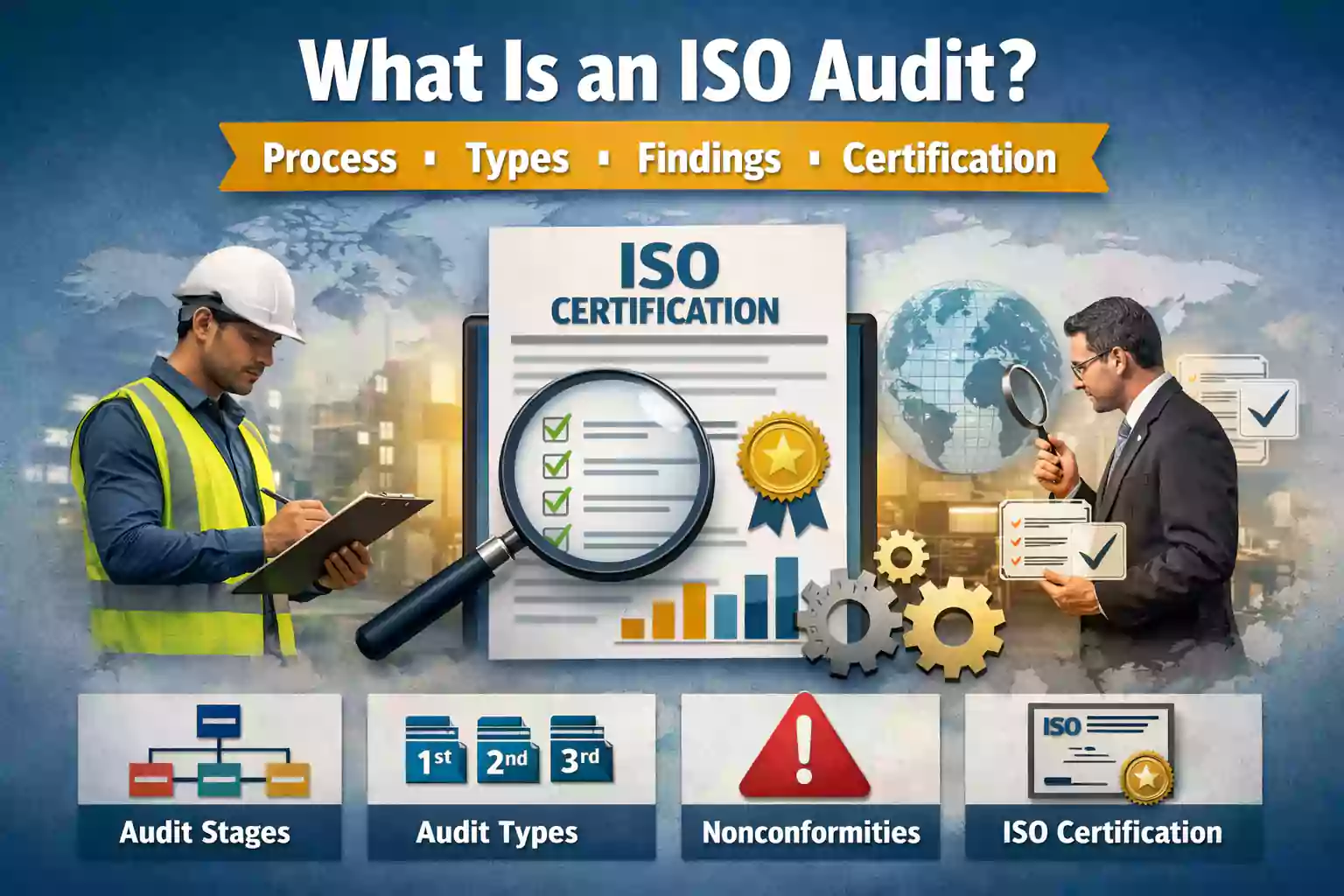
An ISO audit is a structured and objective review of a company’s management system, processes, records, and actual practices to check whether they meet the requirements of a specific ISO standard. It helps verify compliance, identify nonconformities, confirm implementation, and support continual improvement before or during certification.
Understanding what is an ISO audit is essential for any business planning to improve quality, reduce risk, strengthen compliance, and move toward certification with confidence. ISO Cert International supports organizations through the audit journey with practical certification-focused services that help turn compliance requirements into measurable business value.
What Does an ISO Audit Really Mean in Practice?
When asking what is an ISO audit, the real meaning goes beyond paperwork or a simple iso inspection. An ISO audit is a professional evaluation of whether a management system is not only documented, but also implemented and effective in daily operations.
- It checks whether policies, procedures, records, and responsibilities are aligned with the chosen ISO standard.
- It compares written processes with actual practice through interviews, observation, and evidence review.
- It helps reveal gaps, weak controls, and areas where the system is not working as intended.
- It supports management in improving consistency, accountability, and operational discipline.
In practical terms, an ISO audit answers one core question: is the organization doing what it says it does, and does that system meet the standard’s requirements? That is why businesses treat the audit process as a strategic tool, not just a certification event.
Why an ISO Audit Matters for Business Performance
Many businesses first search what is an ISO audit because they think only about certification. In reality, the value of an ISO audit is much wider. A well-managed audit can improve operations, reduce risk, and strengthen trust with customers, regulators, and procurement teams.
- It highlights process weaknesses before they become customer complaints or compliance issues.
- It improves internal control by checking responsibilities, records, approvals, and follow-up actions.
- It supports continual improvement by identifying recurring gaps and improvement opportunities.
- It increases confidence in the management system before a third-party certification audit.
- It helps leadership make better decisions using verified evidence rather than assumptions.
For organizations operating in competitive markets, an ISO audit is often the difference between having documents on paper and having a system that genuinely works. That is why audit readiness is closely linked to business credibility and long-term growth.
The Main Types of ISO Audit Every Company Should Know
Not all audits are the same. The purpose, auditor, and outcome can differ depending on the audit type.
ISO audit types table
| Audit Type | Who Performs It | Main Purpose | Typical Result |
|---|---|---|---|
| First-party audit | Internal auditors or trained staff | Review internal compliance and effectiveness | Internal findings and actions |
| Second-party audit | Customer, buyer, or supplier representative | Evaluate a supplier or contractor | Supplier approval or corrective action |
| Third-party audit | Independent certification body | Assess conformity for certification | Certification recommendation or nonconformities |
- First-party audit is the iso internal audit. It helps a business evaluate itself before certification or surveillance.
- Second-party audit is usually conducted by a customer or a major client checking a supplier.
- Third-party audit is the formal external audit performed by an independent certification body.
Understanding these categories helps explain why an internal audit alone is not the same as certification, even though both are essential parts of the overall ISO audit process.
How the ISO Audit Process Works from Preparation to Certification
Anyone searching what is an ISO audit usually also wants to understand the process. The audit is not one single event. It is a sequence of connected steps that begin long before the auditor arrives and continue after the audit report is issued.
Typical ISO audit process table
| Stage | What Happens | Why It Matters |
|---|---|---|
| Planning | Audit scope, dates, sites, and criteria are confirmed | Creates structure and expectations |
| Document review | Key documents and system information are reviewed | Measures readiness |
| Stage 1 audit | High-level review of preparedness and documentation | Identifies major readiness gaps |
| Stage 2 audit | Full audit of implementation and effectiveness | Main certification assessment |
| Findings and report | Conformities and nonconformities are documented | Defines next actions |
| Corrective action | Gaps are addressed and closed | Supports certification decision |
| Surveillance | Periodic follow-up audits | Maintains certification |
| Recertification | Full review at cycle end | Renews certification cycle |
- The process starts with understanding the ISO standard, defining the scope, and preparing documented information.
- Stage 1 checks whether the management system is sufficiently ready.
- Stage 2 examines implementation in real operations.
- After the audit, findings are reviewed and corrective actions may be required.
- Once approved, certification enters a surveillance and recertification cycle.
This full journey is one of the most important parts of explaining what is an ISO audit in a way that matches real search intent.
What Auditors Look for During an ISO Audit
One of the most useful ways to explain what is an ISO audit is to show what auditors actually check. Businesses often assume the audit is only about documents, but a real ISO audit evaluates evidence from several angles.
What auditors usually review
| Audit Area | Examples of Evidence |
|---|---|
| Documents | Policies, procedures, scope, objectives, manuals |
| Records | Training logs, maintenance records, corrective actions, monitoring data |
| Interviews | Staff awareness, role clarity, process knowledge |
| Observation | Activities, controls, work practices, site conditions |
| Performance | KPIs, audit results, complaints, trend analysis |
| Improvement | Internal audit outcomes, management review, action tracking |
- Auditors compare documented procedures with actual implementation.
- They review whether employees understand their responsibilities.
- They sample records to confirm the system is controlled and traceable.
- They assess whether corrective actions are effective and timely.
- They check whether top management is involved in review and improvement.
This is where ISO Cert International can add real value in the market: helping businesses understand not only what the standard says, but what objective evidence is expected during an actual audit.
Common ISO Audit Findings and What They Mean
A complete article on what is an ISO audit should not stop at the process. It should also explain the language of audit results, because many businesses worry about what happens when a gap is found.
ISO audit findings table
| Finding Type | Meaning | Usual Impact |
|---|---|---|
| Conformity | Requirement is met | Positive result |
| Observation / OFI | Improvement is possible without clear breach | Suggested enhancement |
| Minor nonconformity | Limited gap that does not break the full system | Corrective action needed |
| Major nonconformity | Serious failure or systemic breakdown | Can delay certification |
- A conformity confirms that the requirement has been met.
- An observation or opportunity for improvement is not a formal failure, but it points to a weakness or future risk.
- A minor nonconformity shows a controlled but real gap.
- A major nonconformity indicates a serious issue, such as missing implementation or failure in system control.
Understanding findings reduces anxiety and helps leadership respond in a structured way. The purpose of a professional ISO audit is not to trap the business, but to verify effectiveness and support improvement.
How to Prepare for an ISO Audit Effectively
A practical explanation of what is an ISO audit must include preparation. Audit success depends less on last-minute activity and more on how well the system has been implemented over time.
- Review the scope of certification and ensure it matches actual operations.
- Confirm that policies, procedures, records, and responsibilities are current and controlled.
- Conduct internal audits before the external audit date.
- Complete management review and document follow-up actions.
- Train employees so they can explain their work clearly and consistently.
- Check that corrective actions from previous audits or issues have been closed.
- Make sure records are accessible, accurate, and traceable.
Simple pre-audit readiness checklist
| Readiness Point | Status to Confirm |
|---|---|
| Scope defined | Yes |
| Documents controlled | Yes |
| Internal audit completed | Yes |
| Management review completed | Yes |
| Staff prepared | Yes |
| Corrective actions closed | Yes |
| Records available | Yes |
Preparation is where audit confidence is built. A structured approach turns the ISO audit process from a stressful event into a controlled and manageable business exercise.
ISO Audit vs ISO Certification: What Is the Difference?
A large number of businesses confuse the audit itself with certification. To answer what is an ISO audit properly, this difference must be made clear.
- An ISO audit is the assessment activity.
- ISO certification is the formal outcome issued after successful evaluation by an independent certification body.
- A company may conduct internal audits regularly without yet being certified.
- Certification usually depends on a third-party audit, closure of nonconformities if required, and approval through the certification process.
- Certification is maintained through surveillance audits and renewed through recertification.
This distinction matters commercially because many organizations search for certification when they are still at the readiness stage. Explaining the difference helps position the article for both informational and commercial investigation queries, which improves relevance and conversion potential.
How Long an ISO Audit Takes and What Affects the Timeline
Another common question behind what is an ISO audit is how long the process takes. There is no single universal duration because audit time depends on the organization’s size, complexity, number of sites, standard, and readiness level.
- Small businesses with a simple scope may complete the process faster.
- Multi-site or high-risk operations usually require more audit time.
- Poorly controlled documents or missing records often delay readiness.
- Open nonconformities from internal reviews can extend the timeline.
- The chosen ISO standard also affects the level of audit depth and evidence required.
In practice, businesses should think in terms of preparation time, Stage 1, Stage 2, corrective action closure, and ongoing surveillance. A realistic audit timeline is built on system maturity, not just calendar dates. That is why planning early often reduces both delay and cost.
Choosing the Right Certification Body for an ISO Audit
A commercially strong article on what is an ISO audit should guide the reader toward the next logical business decision: choosing the right certification body. This section is important because many competitor pages explain the audit but do not explain how to evaluate the provider behind it.
- Look for a certification body with a clear and transparent certification process.
- Check experience in the relevant industry and management system standard.
- Review how audit stages, findings, and follow-up actions are communicated.
- Confirm that the audit approach is professional, structured, and evidence-based.
- Assess whether the provider gives clarity on readiness, timelines, and scope.
ISO Cert International is relevant here because businesses often need a partner that can support audit preparation, certification planning, and professional third-party evaluation without turning the process into unnecessary complexity. A strong certification body helps businesses move from compliance effort to recognized certification value.